
Where to go, how to travel, and what to see in Laos
We may earn a commission from purchases made through some affiliate links on this website
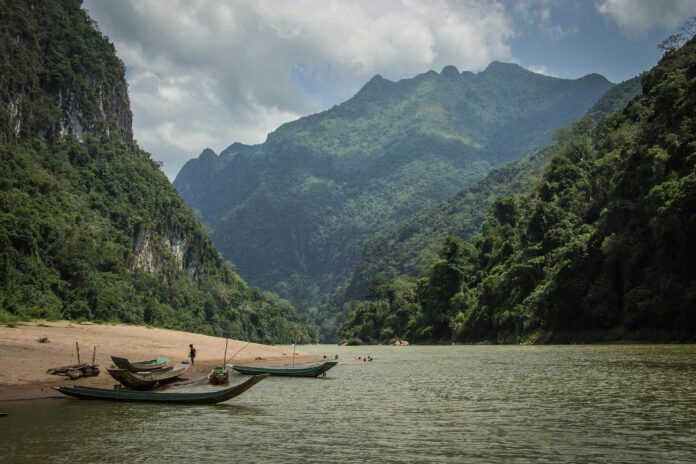
Laos is one of Southeast Asia’s most underrated destinations. From the incense filled streets of Luang Prabang to the wide, island-dotted Mekong in the south, it’s a country that gets under your skin. Ancient temples, thundering waterfalls, alms giving ceremonies and misty mountains are just part of daily life here. Often overshadowed by its big sisters of Thailand and Vietnam, Laos isn’t just a destination for backpackers anymore. This ultimate travel guide to Laos brings together the places, routes and practical information you need to make the most of any trip to this enigmatic country.
Where Is Laos?
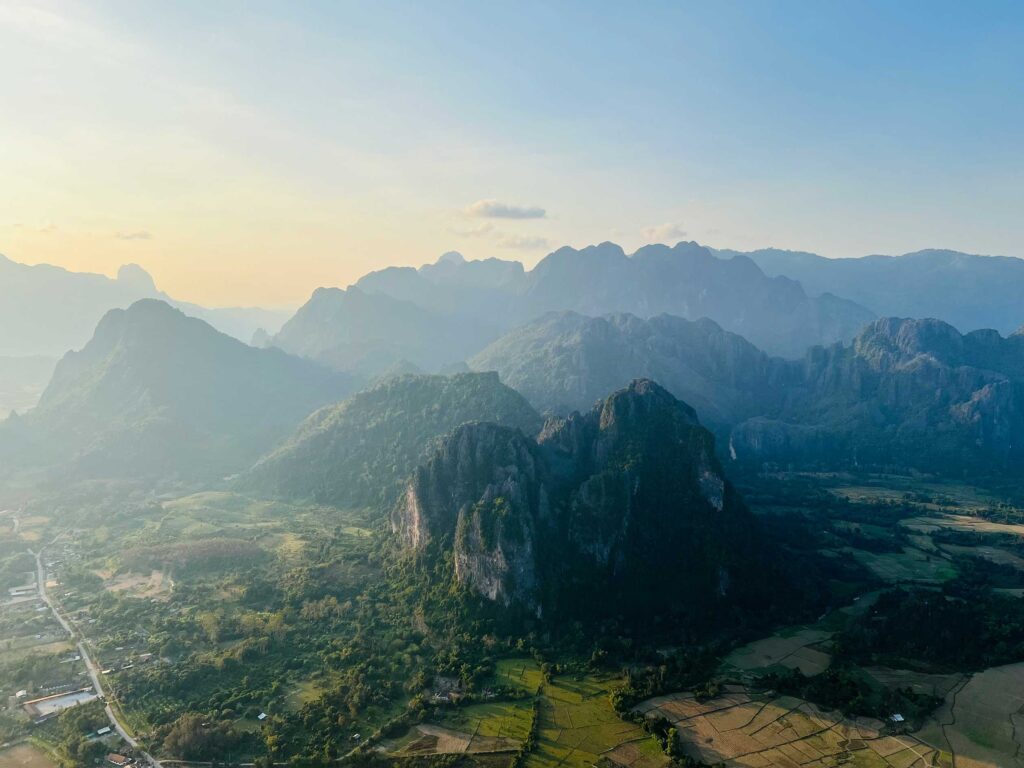
Laos sits in Southeast Asia as the region’s only landlocked country, bordered by Thailand, Vietnam, Cambodia, China and Myanmar. Its geography is shaped by forested mountains, limestone cliffs, fertile river valleys, and of course, the mighty Mekong river, which forms much of its western boundary. Around 70% of Laos is mountainous, giving way to the spectacular regions of Vang Vieng and the Bolaven Plateau. Its population of around 7.5 million is spread between rural villages and small cities.
How to Get to Laos
The main international airport for arrival into Laos is Luang Prabang (LPQ). You can fly direct here from cities such as Bangkok, Hanoi, Singapore and Kuala Lumpur. Flights from Europe and the UK can connect via Singapore or other major Asian cities. You can also fly into Vientiane (VTE), the capital city, and Pakse (PKZ) in the south of the country. The iconic slow boat that travels from Chiang Rai, Thailand to Luang Prabang is a must for those who love getting off the beaten path. Two days of river scenery, mountains and small villages slowly ease you into the Laos way of life.
When to Visit Laos
Laos has a tropical monsoon climate with three distinct seasons:
November to February is the cool season and absolutely the best time to visit. Clear skies and warm, comfortable temperatures make it perfect for exploring waterfalls, temple hopping and jungle trekking.
March to May sees temperatures rise to 35–40°C. Prices drop as some activities become uncomfortable or even dangerous in the heat. Cooler regions like the Bolaven Plateau offer some respite from the heat if you do go during these months. June to October brings the monsoon rains as the country turns lush and green. Waterfalls are at their most spectacular, but many swimming spots will be unsafe. Expect short, heavy downpours rather than constant rain. Fewer tourists and cheaper prices make this a popular time for those travelling on a budget.
Where to go in Laos
Luang Prabang
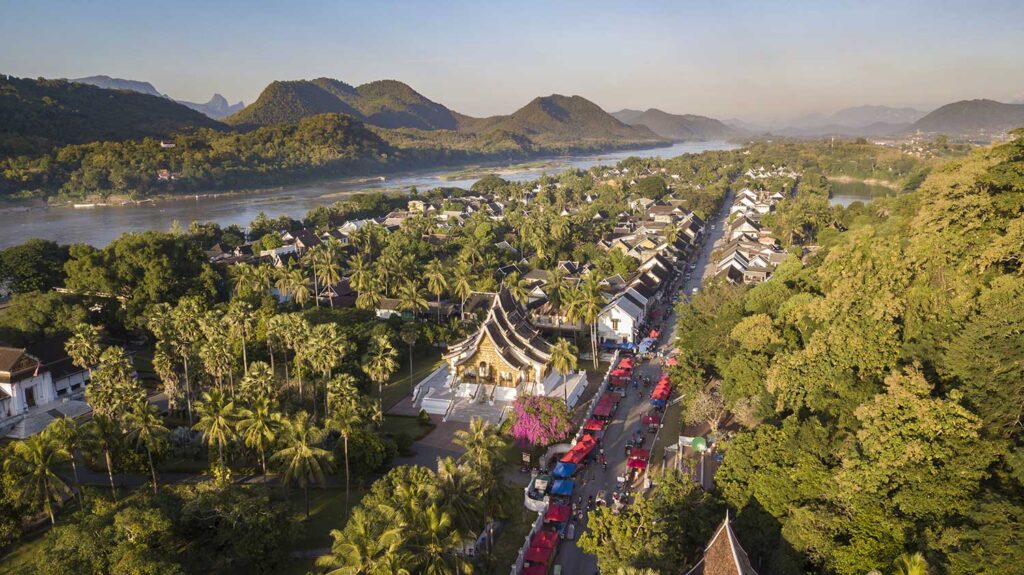
Laos’ most atmospheric city, and arguably the prettiest in the whole of Southeast Asia. A beautiful mix of working Buddhist temples and French colonial architecture, where you’ll find monks walking the streets next to bakeries selling pastries and fresh coffee. All along the shores of the Mekong river, it’s a must visit and the most popular place for visitors. Highlights include the famous night market, Wat Xieng Thong and climbing Mount Phousi for sunset. The mysterious Pak Ou caves and the breathtaking Kuang Si Falls are short day trips from the city. You can’t miss the Alms Giving Ceremony while you’re here – it’s a centuries old ritual that happens every morning. Three to five days is ample time here. To fit in all the highlights, read our 3 Day Luang Prabang itinerary here.

Vang Vieng
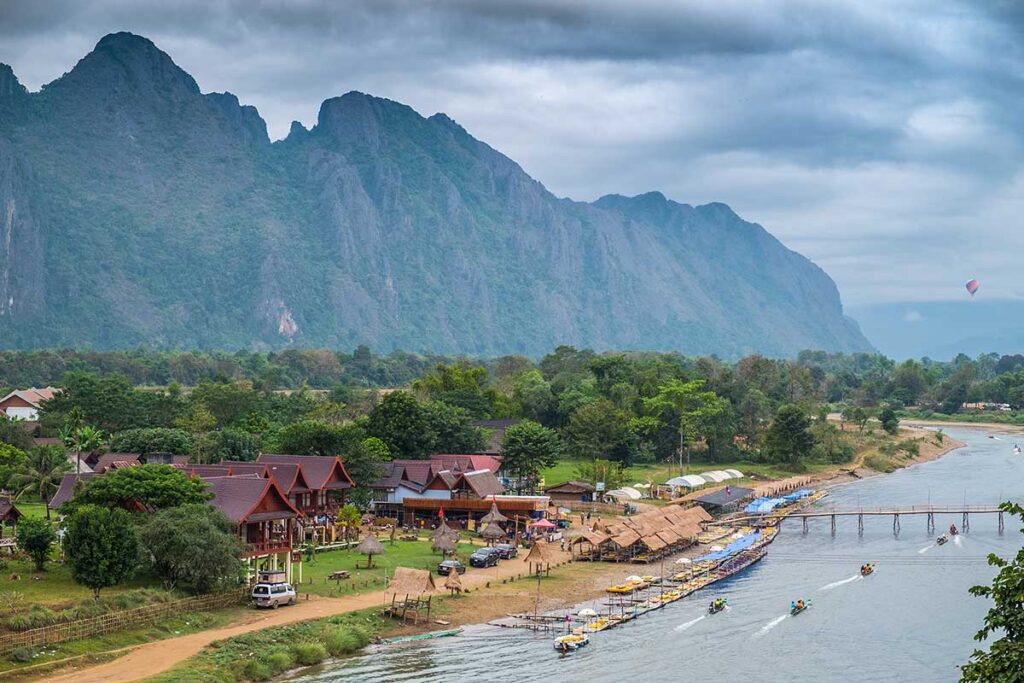
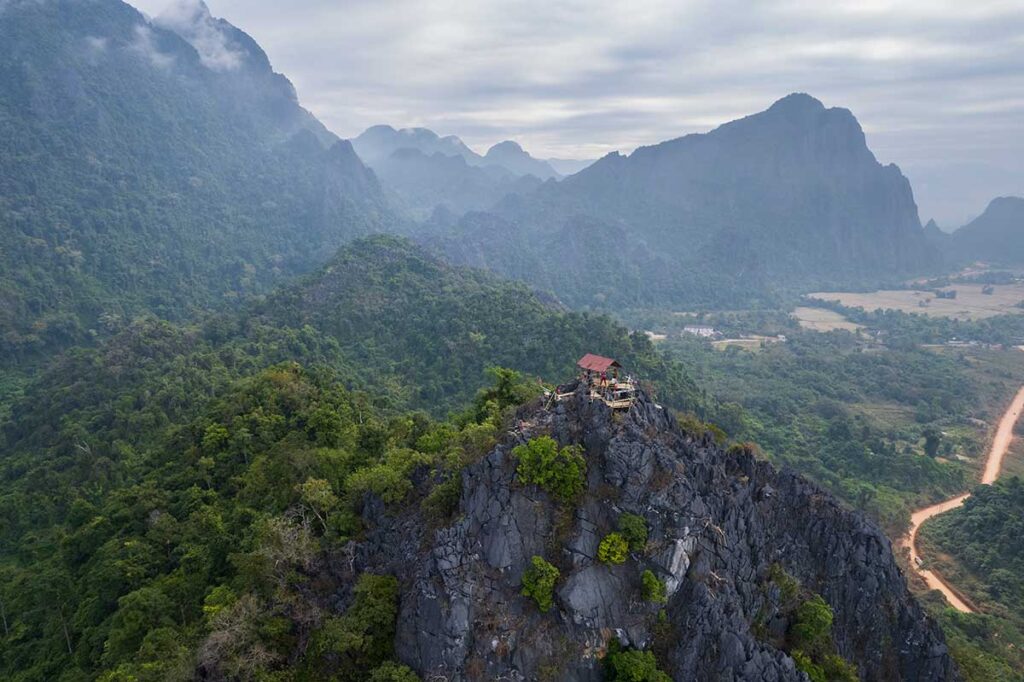
Undoubtedly the adventure capital of Laos, surrounded by limestone mountains and emerald rice fields. Many people claim that river tubing was invented here, and a visit to Vang Vieng was once a rite of passage for any backpacker in Southeast Asia. If there isn’t an adventure activity here, it’s not worth doing. As well as river tubing, try your hand at rock climbing, kayaking, zip lining, caving, jungle trekking and hot air ballooning, and don’t forget to cool off in the turquoise waters of the blue lagoon.For more inspiration, read our 10 Best Things to do in Vang Vieng here.
Vientiane
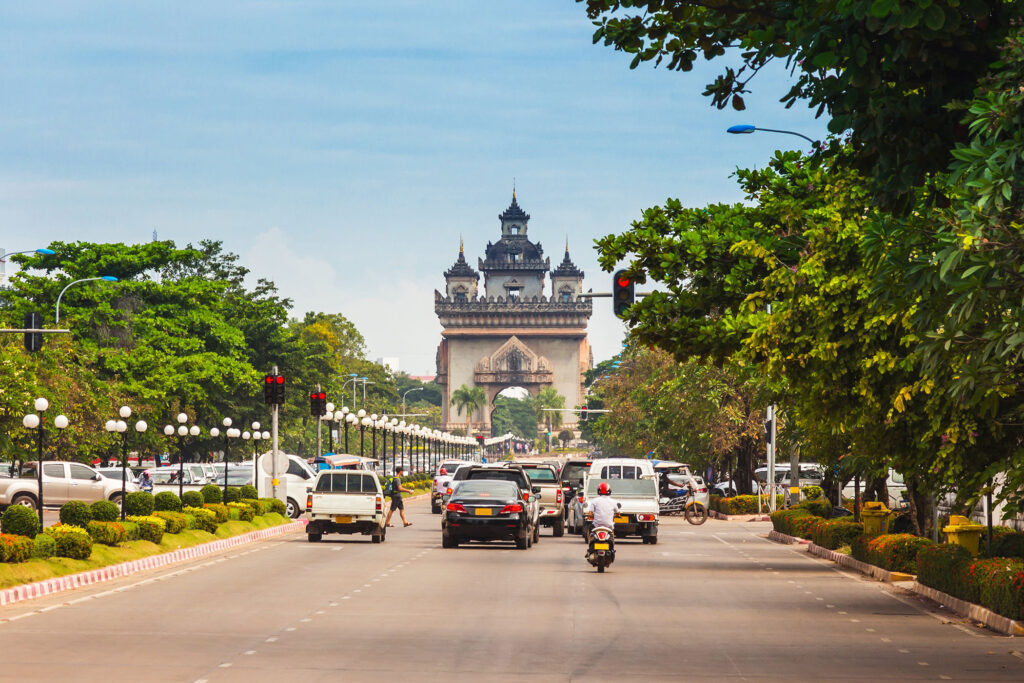
Well known as Asia’s sleepiest capital, there’s a beauty and a calmness to be found in this quiet, leafy and elegant city. The magnificent Patuxai Monument is a reminder of the country’s battle for independence, resembling the Arc du Triomphe in Paris. Marvel at the golden stupa of Pha That Luang, learn more about the country’s devastating past at the COPE Centre and stroll along the night market that spills out across the banks of the Mekong as it drifts lazily past. For more ideas, read our 12 Best Things to do in Vientiane here.
Bolaven Plateau
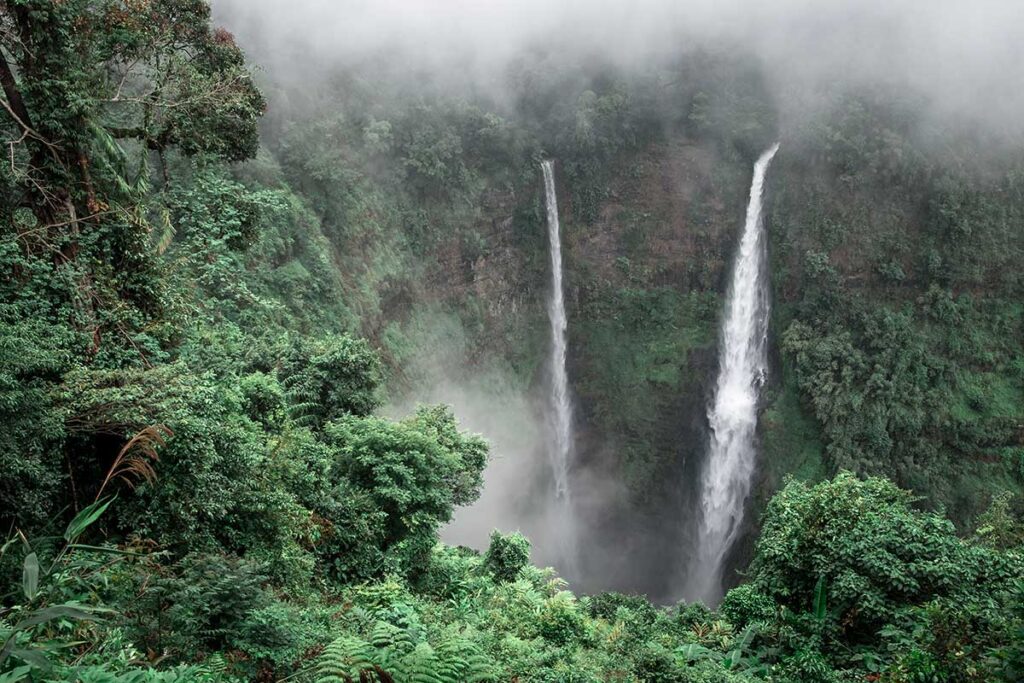
A less visited, highland region known for its crashing waterfalls and coffee plantations. Tad FaneandTad Yuang are two of the most spectacular, while local coffee plantations dot the landscape and roadside stalls sell fresh Lao coffee. If you can, hire your own scooter and explore the area on one of the scenic motorbike loops. Read more on our Guide to the Bolaven Plateau here.

Pakse & the 4,000 Islands
As you head south, the Mekong spreads into a labyrinth called the 4000 Islands, otherwise known as Si Phan Don. This area is slow travel at its finest. Pakse is the main gateway, reached by a very long drive, or via airplane. From here, you can travel to Wat Phou, a magnificent, crumbling temple complex that shows you what Angkor Wat in Cambodia would have been like 40 years ago, and before mass tourism. Built in the 5th century, it spreads out over three tiers in the shape of a mandala, with shrines still full of offerings left by locals. Read our full Guide to Visiting Wat Phou temple here. To reach the 4000 Islands, head towards the islands of Don Det or Don Khone, and settle into a way of life where the only thing you need to worry about is which hammock to sit in to watch the sunset. The lucky amongst you might be able to spot the elusive Irrawaddy dolphins, and for those that need a break from island life, the thunderous Khone Phaphengfalls are nearby.

Top Things to Do in Laos
1. Swim in Kuang Si Falls
A multi-tiered turquoise waterfall near Luang Prabang, this is one of Southeast Asia’s most iconic natural sights. Cascading 200ft into the jungle, the water tumbles down a series of limestone terraces into pools framed by dense jungle and wooden walkways. A trail leads up the side of the waterfall and you can swim in several levels, hike to quieter viewpoints or explore nearby forest trails. Get here as early in the morning as you can to beat the crowds. Don’t forget to visit the Bear Sanctuary next door, to see their amazing work at rehabilitating sunbears.
2. Cruise the Mekong River
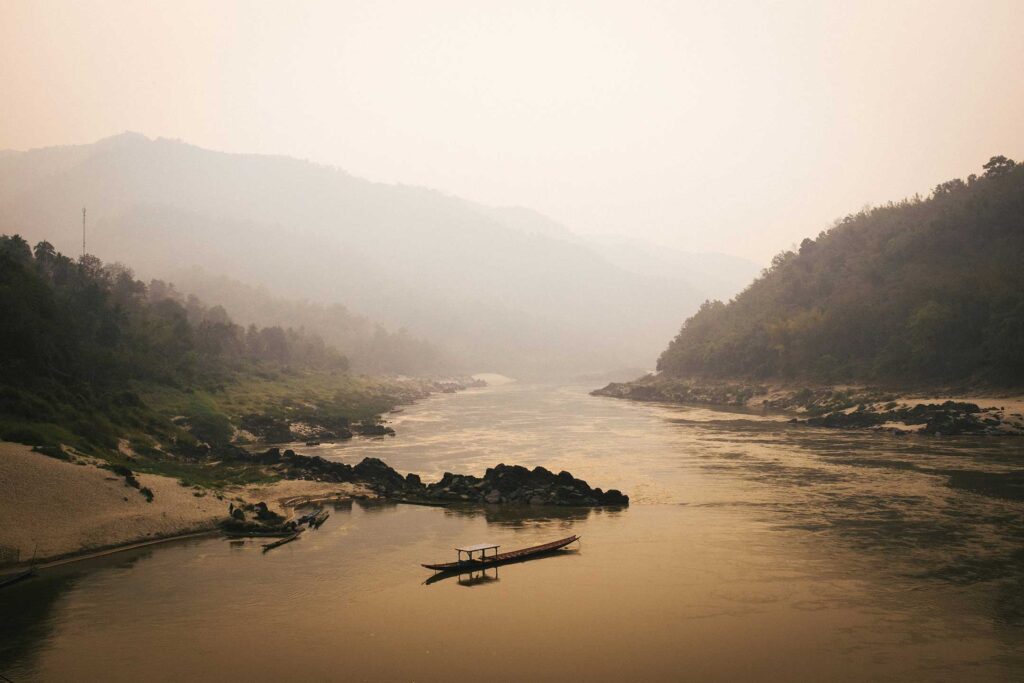
The Mekong is the backbone of Laos, shaping trade, daily life and, of course, travel. Cruising its waters by slow boat or on a sunset cruise allows you to see the country from a different perspective. Villages drift past, children wave from the riverbanks and water buffalo cool off in the shallows. Forested hills rise in the distance and you can witness first hand how deeply connected Laos remains to this legendary river.
3. Explore Ancient Temples
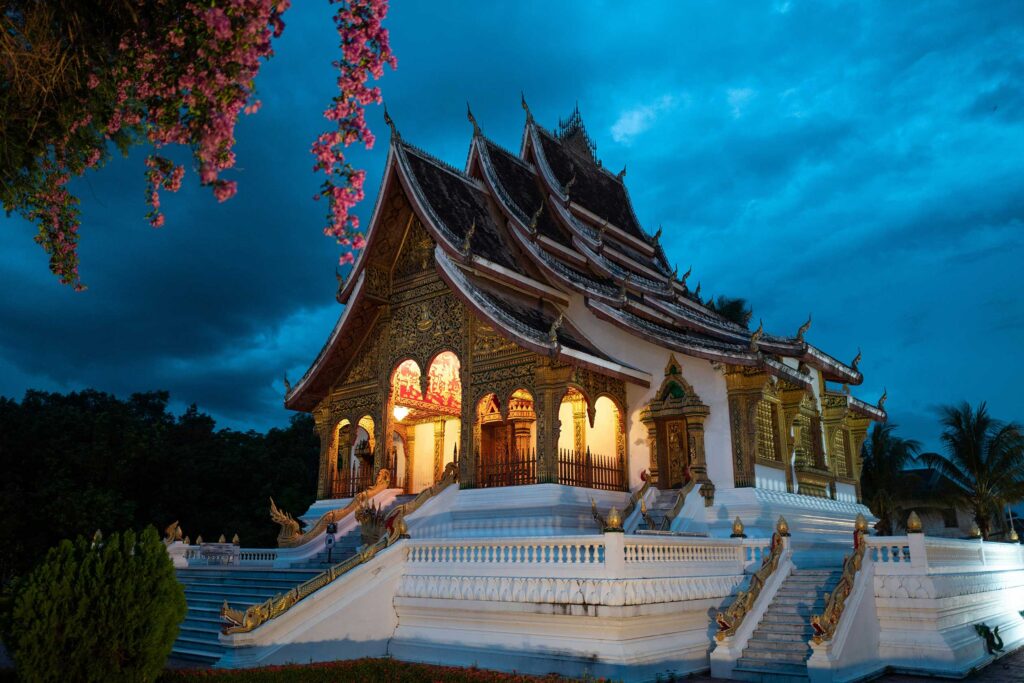
Laos’ temples are its most famous landmarks, monuments that reflect the deeply spiritual practices of the country. Wat Xieng Thong in Luang Prabang is one of the finest examples of Lao Buddhist architecture, with its famous pointed roof, shimmering mosaics and highly decorated halls. In the south, the Khmer ruins of Wat Phou are from a much older tradition, dating back to the 5th century and spread over three terraces. Both temples are still used by monks and locals today.
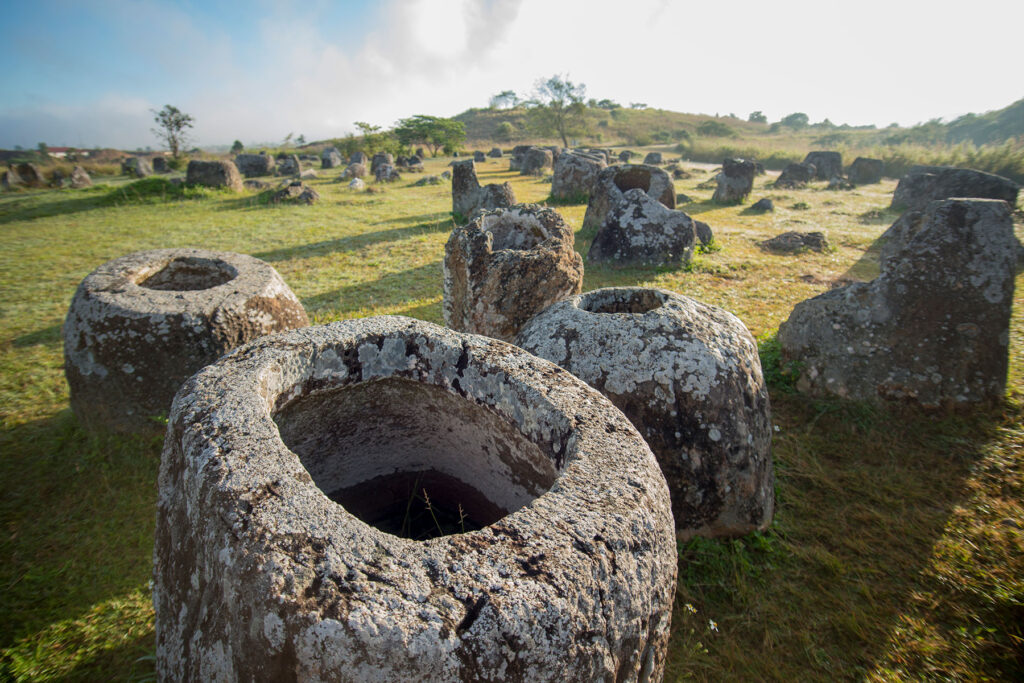
4. Visit the Plain of Jars
Scattered across the highlands of central Laos, the Plain of Jars is one of the region’s most mysterious archaeological sites. Thousands of massive stone vessels lie spread across fields and hillsides, their original purpose still only partly understood. Thought to be linked to ancient burial rituals, the jars date back over 2,000 years. Many of the sites are off limits due to UXOs, but a few are open to the public, leaving visitors with more questions than they answer. Read our full Guide to Visiting the Plain of Jars here.

5. Watch Almsgiving at Dawn
Each morning at dawn, in towns like Luang Prabang, monks walk silently through the streets collecting alms from local residents. This daily ritual has taken place for generations and is an expression of Buddhist devotion and the deep relationship between monks and local villagers. Tourists are welcome to observe and even join in with the giving of alms, providing this is done respectfully. It’s a window into a fast disappearing way of life. To learn more about experiencing this ancient ceremony, read our Guide to Experiencing the Alms Giving here.

6. Adrenaline in Vang Vieng
Vang Vieng’s dramatic, rocky landscape hides a network of caves, lagoons and underground rivers waiting to be explored. The area became famous amongst backpackers for its raucous and wild river tubing, where tourists float on inner tyre tubes down the river, stopping at bars along the way. It’s become safer and more regulated in recent years, but the area is still known for its party vibe and an almost endless menu of adrenaline-pumping activities. Interested in the iconic Vang Vieng experience? Read our Full Guide to River Tubing in Vang Vieng here.

7. Taste Lao Cuisine
Lao food is fresh and full of herbs, thanks to the thick jungle and lush fertile soil here. Sticky rice is the foundation of nearly every meal, paired with dishes such as laap (minced meat salads), charcoal grilled fish and mok pa (steamed fish in banana leaves). Locally, meals are often shared, with plates placed at the centre of the table surrounded by a myriad of dipping sauces and mountains of freshly picked herbs. For a deeper dive into the food culture, read our Foodie’s Guide to Laos here.
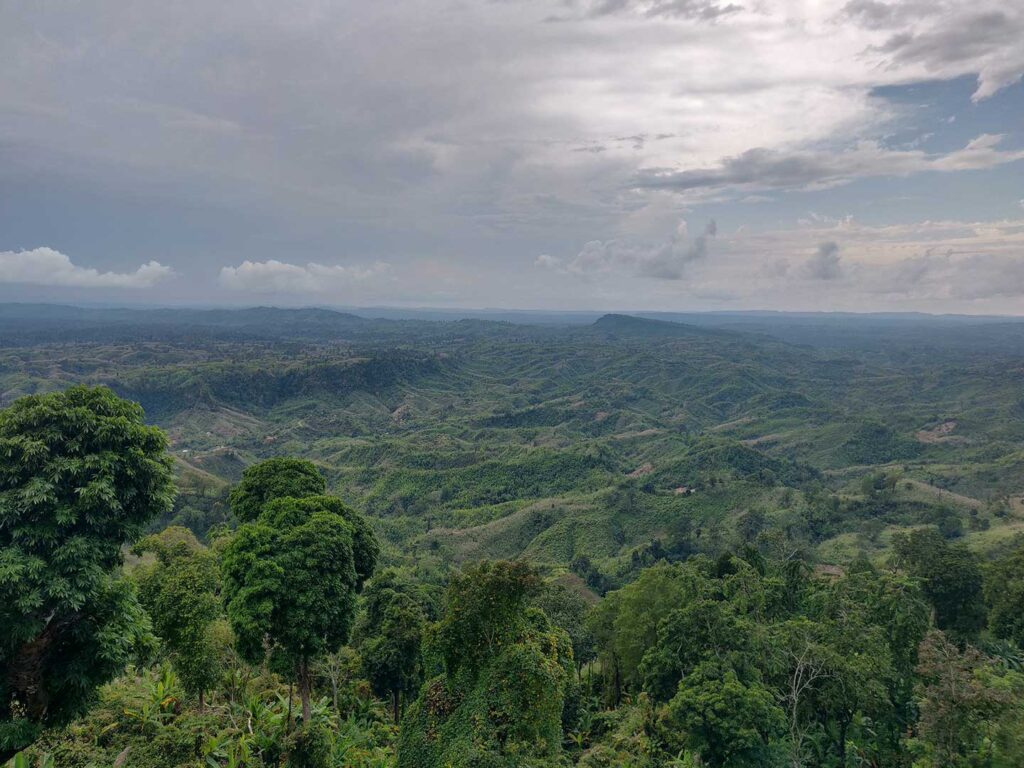
8. Explore the Bolaven Plateau
The Bolaven Plateau in southern Laos is the coolest region in the country, home to coffee farms and dramatic waterfalls. The fertile volcanic soil makes it the perfect environment for growing coffee, as well as tropical fruits and thick, lush jungle. Waterfalls tumble into deep forested gorges, creating otherworldly swimming holes and some of the best jungle treks in Southeast Asia. Marvel at Tad Fane waterfall before going on a tour of Mystic Mountain Coffee’sorganic plantation. For more on the region, read our full Guide to the Bolaven Plateau here.
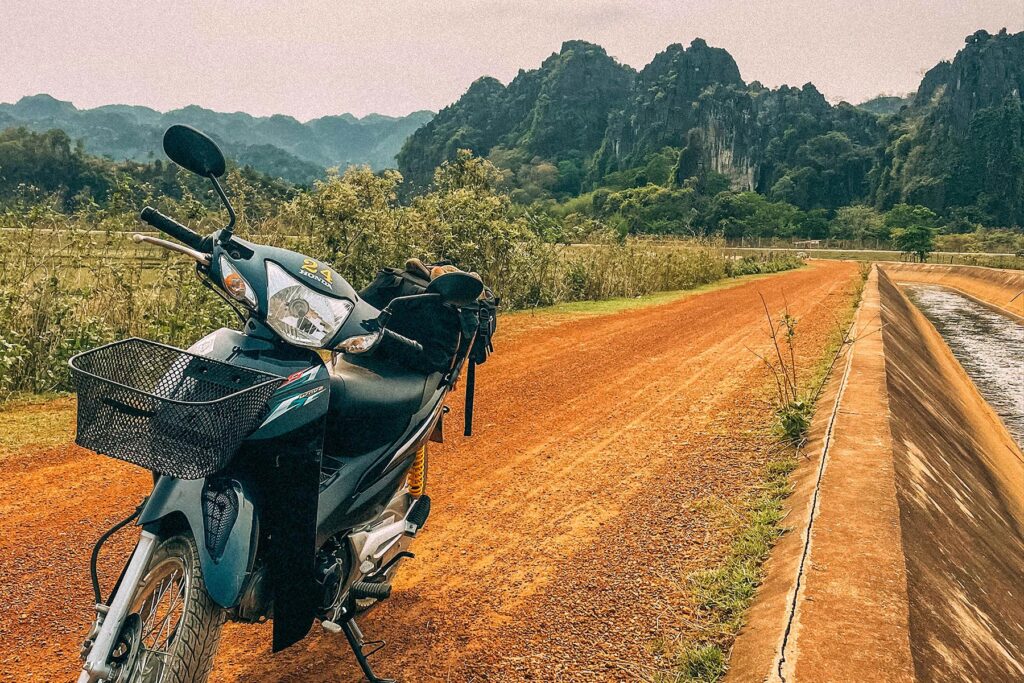
9. Ride the Thakhek Loop
The Thakhek Loop is a circular route through remote villages, caves, and quiet countryside in central Laos. Usually completed over three to five days by motorbike, it passes turquoise lagoons, underground rivers and dramatic cliffs carved with ancient statues. With guesthouses and small villages dotted along the way, you’ll feel like you’re experiencing the real Laos, far removed from mass tourism. If you love travel that feels like adventure and discovery, this one’s for you. Read more with our full Guide to Riding the Thakhek Loop here.

10. Wander the 4,000 Islands
The 4,000 Islands, otherwise known as Si Phan Don, sit at the southern edge of Laos where the Mekong spreads into countless channels. Life here moves slowly, shaped by river currents and daylight. Cycle between villages, swim near riverbanks or simply relax in a hammock with a book. There is little pressure to see or do anything specific, making this one of the best places in Laos to rest and reset before moving on. Read more with our Guide to Visiting the 4000 Islands here.
How to Get Around Laos
High-Speed Rail
Laos might be a sleepy country compared to the rest of Southeast Asia but it has a fast and efficient high speed rail network. The Laos–China Railway now connects Vientiane, Vang Vieng and Luang Prabang with clean, modern trains that run quickly and reliably through some of the country’s best landscapes. What once took most of a day by road can now be covered in just a few hours, making it easier to follow a north-to-south itinerary without losing time or comfort.
Domestic Flights
For longer distances, domestic flights are a quick and easy way to travel across Laos. Routes link Vientiane, Luang Prabang and Pakse, amongst others, connecting the north, centre and south of the country. Flights are generally short and affordable, and they are especially useful for reaching southern Laos from the capital or returning from the 4,000 Islands without long overland journeys.
Tuk tuks
Tuk-tuks are the most common way to get around towns and cities in Laos. They are used for everything from short hops between temples to trips to waterfalls and night markets. Prices are usually negotiated before you set off, and rides are generally inexpensive. Tuk-tuks are best suited to towns and nearby sights, rather than long journeys.
Scooter Rental
Renting a scooter is a popular choice in places like Vang Vieng, Pakse and the 4,000 Islands, especially for reaching viewpoints, waterfalls and rural villages. Roads are quieter than in many parts of Southeast Asia and scenic trails like the Thakhek Loop mean you can make an entire experience out of it. It goes without saying that having your own wheels allows you to explore at your own pace and reach areas that public transport does not serve, especially in more remote areas of Laos like the Bolaven Plateau.
Boats
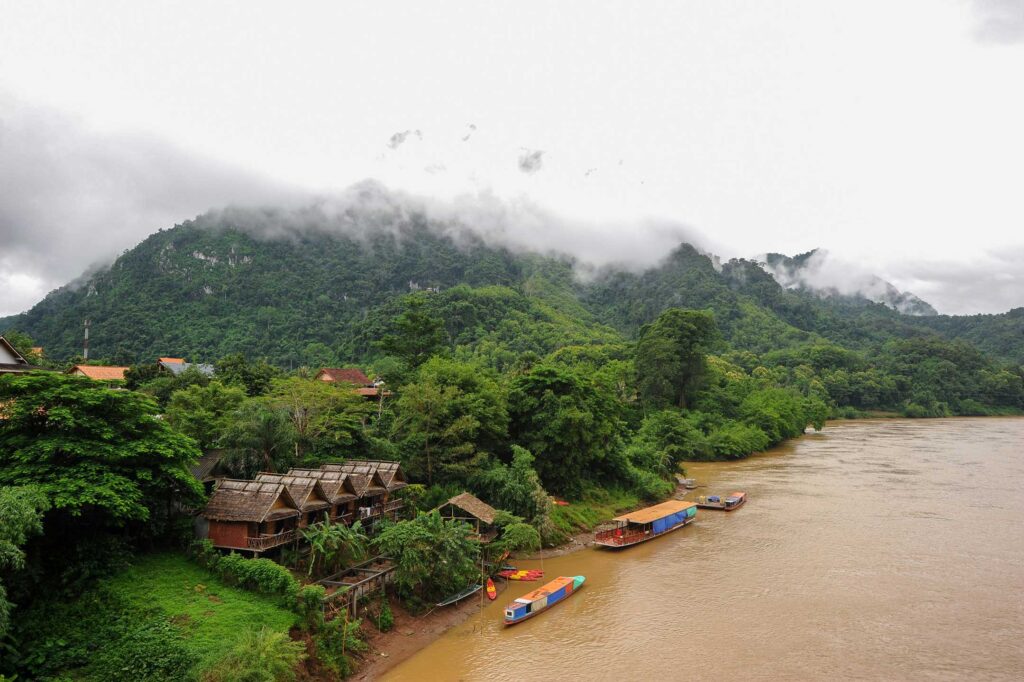
Rivers are a vital part of transport in Laos, particularly in the north and far south of the country. Slow boats along the Mekong connect towns and villages that are otherwise difficult to reach, while ferries and small long-tail boats provide access to the islands of Si Phan Don. You can find some incredibly scenic river boat trips that double up as transport to a new destination. Travel from Pakse to the 4000 Islands by boat, or for an exciting 2 day adventure, travel from Luang Prabang to Chiang Rai Thailand.
Essential Travel
Visa
For travellers from the UK and most other countries, you’ll need a tourist visa to visit Laos. There are two main ways to get a tourist visa for Laos:
- eVisa (online): Apply in advance through the official Lao eVisa system. This is a single entry visa usually valid for up to 30 days once you enter the country. It must be applied for at least a few days before travel and once approved, you print the eVisa and present it on arrival.
- Visa on arrival (VOA): Available at major arrival points such as international airports and certain land border crossings. You’ll need the completed application form, passport photos and a fee (around US $30 – $50 in cash, depending on nationality and entry point)
If you wish to extend your stay in Laos, you can do so once or twice through local immigration offices to reach a total stay of up to around 90 days if needed.
From late 2025, travellers are required to complete an online arrival and departure card (Lao Digital Immigration Form) before entering or leaving Laos, replacing the old paper forms. Always check current requirements before travel.
Vaccinations & Health
There are no mandatory vaccines, but it’s recommended to get vaccinated against Hepatitis A as this is transmitted through contaminated food and water. Malaria is present in some parts of very rural Laos but it’s generally considered a low-risk. If you intend to spend extended periods of time in remote Laos, you might consider malaria tablets, although this won’t be necessary for the vast majority of travel.
Tap water is not drinkable in Laos, so stick to bottled or purified water. Street food is actually one of the safest (and most enjoyable!) way to eat. Food is usually on fast rotation, keeping it fresh, and is cooked on a high heat in front of you.
Money
Currency: Lao Kip (LAK)
ATMs are available in cities, but carry cash if travelling to rural areas

